The 51% Giving Commitment
A light for them.
Life for someone else.
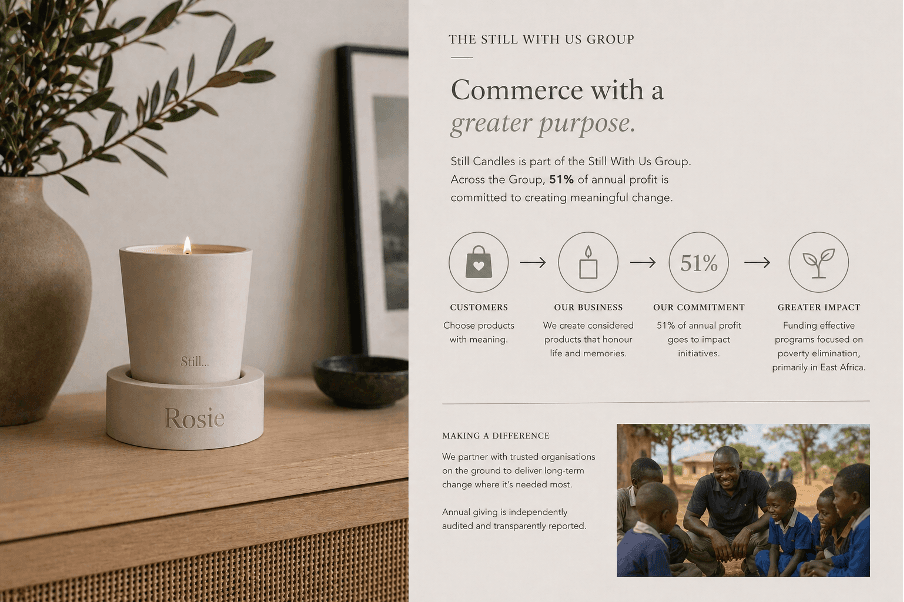
The Still With Us Group commits a minimum of 51% of distributable net profit, every year, to vetted poverty elimination work. Independently audited. Reported in full.
What we commit to
The Still With Us Group — the family of related entities that owns Still… and its sibling brands — commits a minimum of 51% of distributable net profit annually to vetted poverty elimination work, with an initial flagship focus on Kenya and the broader East African region.
The commitment applies to distributable profit, not revenue. Each entity inside the Group operates with normal commercial discipline and reports its own financial results, but the 51% threshold is calculated and audited across the consolidated Group annually.
How it is verified
- The Group prepares an annual Group Giving Report at the close of each financial year.
- The report sets out distributable profit calculated across all Group entities.
- It documents total giving deployed, including recipients and projects.
- It includes independent external audit of methodology and outcomes.
- It is published in full and made available to investors, customers, and the public.
Why this matters to the product
Still… exists at the moment families are most aware of life’s fragility. The 51% commitment exists to extend life for those at the margins of survival. The two are not separate — the product is the engine of the giving. Lighting the candle is, in a real and audited sense, an act that reaches further than the room it warms.
Why it cannot drift
The commitment is structured into Group governance, overseen by an independent Impact Committee with separate authority over the giving architecture and annual reporting. It cannot be quietly walked back under future commercial pressure without material public disclosure.
Investors retain access to 49% of distributable profit for return on capital. The structure does not impair any Group entity’s ability to reinvest for growth, build reserves, or pay competitive wages.